Hughes Cove: Premier "No-Bridge" Bay Access In Coconut Grove
Buyers Guide Jason Adams January 15, 2026
Buyers Guide Jason Adams January 15, 2026
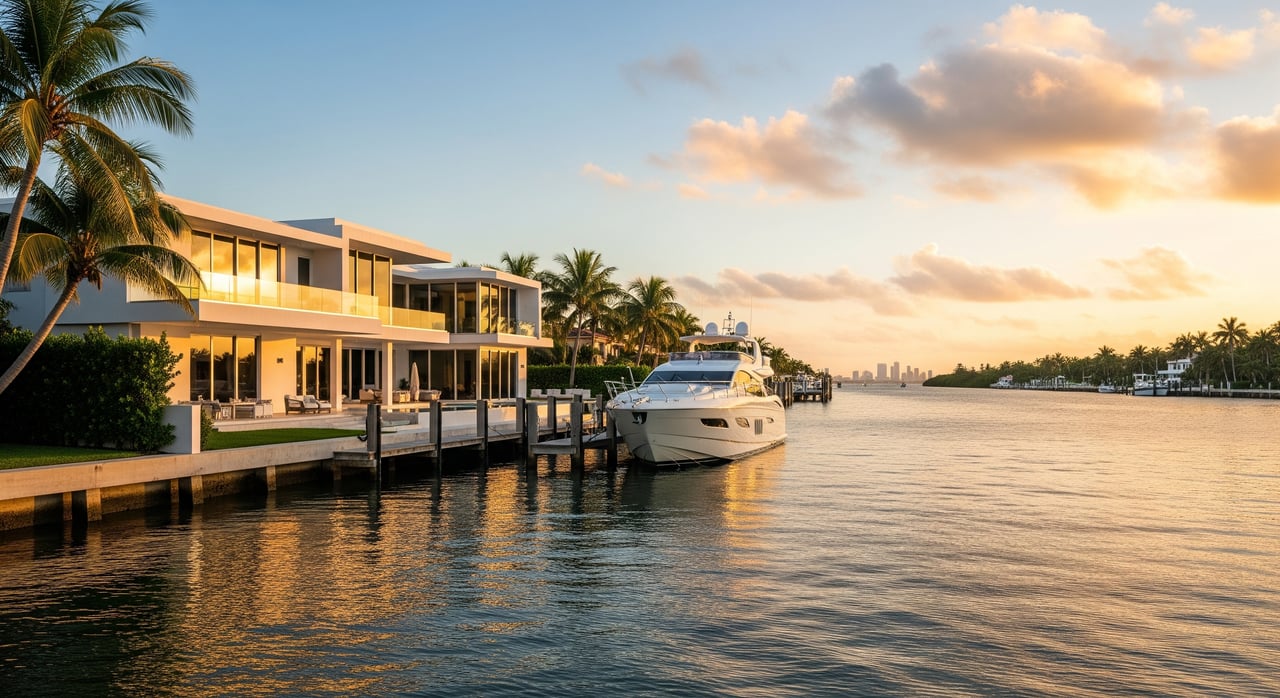
Dreaming of stepping aboard at sunrise and heading straight into Biscayne Bay without waiting on a single bridge? If you are eyeing Hughes Cove in Coconut Grove, you are looking in the right place. Properties here advertise “no-bridge” access for good reason, but not all waterfront routes serve every boat the same way. In this guide, you will learn what no-bridge access really means, why it commands a premium, and exactly how to verify that a Hughes Cove dock will work for your vessel. Let’s dive in.
In simple terms, “no-bridge” access means you do not pass under any fixed or low-clearance vehicular bridges between your dock and Biscayne Bay. This removes vertical clearance limits that can block tall masts or flybridges. It is a major advantage for sailboats and larger motor yachts where air draft is a real constraint.
“No-bridge” is not the same as “open water.” No-bridge describes the absence of overhead obstacles. Open-water access goes further by implying a navigable, adequately deep route to the bay or ocean. Even if your path has no bridges, shallow spots, narrow canals, or tight turns can still limit safe passage.
Local buyers sometimes ask about fixed bridges vs drawbridges. A fixed bridge has a set clearance that cannot be raised, which can restrict tall vessels. A movable drawbridge can open on a schedule, but adds time and reliability concerns. Hughes Cove’s appeal is that the route to the bay avoids those delays entirely.
Heading straight to Biscayne Bay saves time every trip. You avoid bridge opening schedules, radio calls, and queues. For owners who cruise or fish often, this convenience becomes part of daily life.
No-bridge routes make it easier to keep taller or larger vessels at your own dock instead of at an off-site marina. That flexibility matters for sailboats with masts and for motor yachts where air draft can be a limiting factor.
Waterfront is not all equal. True, unobstructed bay access is less common than waterfront frontage in general, especially within sought-after neighborhoods like Coconut Grove. Scarcity supports pricing, and Hughes Cove is well positioned near Biscayne Bay and major marinas, including Dinner Key, which adds everyday utility for boating owners.
No-bridge access attracts a distinct buyer pool. Boat-forward buyers, sailors, and second-home owners who prioritize direct bay access often pay a premium for the lifestyle and time savings. Buyers who value the view but not boating may not pay the same multiple, which is why positioning and marketing matter.
Premium access can come with higher operating costs. Seawall upkeep, dock upgrades, shore power improvements, and potential dredging all influence true ownership cost. If a canal needs intermittent dredging to support larger drafts, that obligation can reduce net appeal for some buyers. Understanding this balance helps you price and negotiate confidently.
A no-bridge route is necessary but not sufficient. Real usability depends on the minimum of depth, width, turning room, and dock capacity.
Depth is variable. Natural shoaling, storm sedimentation, and seasonal changes can alter depth near private docks differently from adjacent channels. Even in a bay with relatively modest tidal range, normal tides, wind setup, and surge can change effective depth by feet over short periods. A route that looks fine at high tide may not work at a negative tide if your draft is marginal.
Some inner canals lack consistent markers. You may encounter shoals, submerged objects, or tight fairways. Larger vessels need adequate turning basins or clear water near the canal mouth to turn under their own power. Wind, current, and wakes complicate maneuvers in narrow waterways. Local knowledge and a recent bathymetric survey are invaluable.
Dock elevation and the type of dock, fixed or floating, influence boarding and line handling. Seawall condition and mooring hardware dictate whether you can safely handle your vessel’s loads or support a lift. Shore power capacity, water, and pumpout access matter if you plan to cruise frequently or stay aboard.
In Miami-Dade County, some canals are publicly maintained while others are private or governed by an HOA. Dredging history and future plans vary by location. If maintenance responsibility is private, timing and costs may fall on owners or the association.
Work on docks, seawalls, and dredging normally requires state, federal, county, and local approvals. The Florida Department of Environmental Protection and the U.S. Army Corps of Engineers regulate dredge and fill activities. County and municipal permits also apply. Understanding existing permits and the feasibility of future upgrades will inform your improvement strategy and timeline.
Seagrass beds, mangroves, and manatee zones are common along the shoreline. These resources can limit dock placement, lift installations, and channel deepening. In some areas, operations may be subject to speed zones and no-wake rules. Plan for extra time if your desired improvements are near protected habitats.
Waterfront homes are often in FEMA AE or V zones. Bridge status does not affect flood risk, so verify your flood zone and base flood elevation. Insurers may price waterfront properties differently and require risk mitigation steps for wind, hurricane, and flood exposure. If you plan to keep a vessel at the dock, ask for homeowners and marine insurance quotes that reflect on-dock storage and infrastructure conditions.
The premium for true no-bridge access reflects utility, scarcity, and the specific capabilities of the dock and canal. The market value depends on what your boat can do from that address. A deeper, wider canal with ample turning room and well-permitted, well-powered dock infrastructure is more useful to a broader range of vessels. That functional flexibility often translates into stronger resale appeal and pricing power with boating buyers.
At the same time, remember the operating side of ownership. If the canal segment requires periodic dredging to keep your draft clear, or if a seawall needs work to support a lift, include those costs in your analysis. The combination of usable access plus clear maintenance planning is what turns a waterfront home into a truly reliable boating asset.
You want a clear, data-backed picture before you write an offer. That means confirming the route, the depths, the turning space, and the permits, then aligning those facts with your vessel and your lifestyle. A local, design-forward team that lives and works in the Grove can help you assess infrastructure, anticipate permitting complexity, and position your offer with confidence.
When you are ready to evaluate Hughes Cove and surrounding Coconut Grove waterfront, our boutique practice pairs negotiation expertise with practical, on-the-water perspective. We help you focus on the details that protect your time and your investment.
Ready to explore no-bridge options in Hughes Cove or nearby waterfront enclaves? Connect with Jessica Adams Luxury Real Estate to refine your brief and see curated listings that fit your boating profile.
We've got more to share with you.
October 8, 2026
October 1, 2026
August 27, 2026
September 24, 2026
September 17, 2026
A New Home Changes Everything.