Getting A Pinecrest Estate Market-Ready: Design, Staging And Timing
July 9, 2026
July 9, 2026
If you want to maximize the sale of a Pinecrest estate, preparation matters as much as the property itself. In a market where buyers expect polish, privacy, and a strong first impression, small missteps in design, staging, or timing can slow momentum. This guide walks you through how to get a Pinecrest home market-ready with a practical, design-forward plan that helps your property show at its best. Let’s dive in.
Pinecrest is not a typical South Florida neighborhood. The Village covers about eight square miles, had roughly 18,388 residents in the 2020 Census, and is known for large estate lots, tree-lined streets, and a strongly owner-occupied housing base. With an owner-occupied rate of 82.8% and a median owner-occupied home value of $1,406,400, the local market tends to reward homes that feel cared for, complete, and aligned with the area’s established residential character.
That matters even more when you look at current market pace. In Q4 2025, Pinecrest recorded 52 closed single-family sales, a median sale price of $2,672,500, median time to contract of 83 days, 91.3% of original list price received, 125 active listings, and 7.8 months of supply. Compared with the broader county, Pinecrest moved more slowly, which means pricing and presentation often need to be sharper from day one.
For most Pinecrest sellers, the smartest pre-listing strategy is not a major renovation. It is a selective refresh that improves what buyers notice first and removes signs of deferred maintenance. In NAR’s 2025 Remodeling Impact Report, buyers were shown to be less willing to compromise on condition, and REALTORS® most often recommended painting the home, painting individual rooms, and addressing roofing before listing.
That approach fits Pinecrest well. In a higher-end market with many cash-capable buyers, condition still influences how quickly buyers engage and how confidently they price the opportunity. The goal is to make the home feel finished, current, and easy to understand.
Fresh paint is often one of the most effective updates before a sale. It brightens interiors, photographs cleanly, and reduces the visual noise that can make a home feel older than it is. If your walls, trim, or ceilings show wear, repainting can create a much stronger backdrop for staging and marketing.
Condition issues deserve equal attention. Scuffed surfaces, aging fixtures, worn caulking, or visible maintenance items can signal bigger concerns to buyers, even when the home is structurally sound. In a Pinecrest estate, buyers tend to notice details quickly because expectations are high.
Kitchens and bathrooms carry outsized influence because buyers read them as indicators of overall upkeep. NAR’s 2025 report noted increased demand for kitchen upgrades and bathroom renovations, which makes these rooms especially important in your pre-listing review. That does not always mean a full remodel, but it may mean updating finishes, repairing worn surfaces, improving lighting, or simplifying the look.
If a kitchen or bath is highly personalized or visually dated, even modest improvements can help. The best updates are the ones that make the space feel cleaner, brighter, and more broadly appealing without overbuilding for resale.
Roof condition can shape buyer confidence early in the process. NAR’s report identified new roofing among the categories buyers are paying attention to before purchase. If your roof is near the end of its life or showing visible wear, it is worth evaluating before you list.
Your front entry also has a measurable effect. Among the highest cost-recovery projects in NAR’s 2025 report were front-door replacements, including a new steel front door and new fiberglass front door. In practical terms, that means your entry should feel crisp, secure, and welcoming from the moment a buyer arrives.
In Pinecrest, presentation is not just about making a home look expensive. It is about making the property feel consistent with the Village’s established aesthetic, which emphasizes residential estate development, protected streetscape character, and strong tree canopy. A market-ready home should feel composed, not overdone.
That usually means simplifying rather than adding. Mature landscaping, orderly garden structure, and clean sight lines often read better than heavy decoration. Buyers should experience the lot as intentional, shaded, and well maintained.
Large lots are a defining part of Pinecrest, but size alone does not create value. Buyers need to understand how outdoor space lives. If the yard feels undefined, cluttered, or overgrown, the property can seem harder to maintain and less usable.
Create clear zones for arrival, lounging, dining, and poolside use where possible. Keep decor restrained and focus on flow. A well-composed exterior helps buyers connect emotionally to the lifestyle the property offers.
Exterior preparation in Pinecrest also requires planning. The Village requires landscaper registration, regulates many tree removals and relocations through permits, and notes that pruning and canopy work can trigger permit and replacement requirements. The Village also bars fertilizer application from May 15 through October 31.
That means your landscaping timeline should begin earlier than many sellers expect. If your property needs substantial cleanup, tree work, or planting coordination, waiting too long can create delays right before launch.
Staging is one of the clearest ways to help a Pinecrest property compete. In NAR’s 2025 staging survey, 83% of buyers’ agents said staging made it easier for buyers to visualize the property as a future home. Sellers’ agents also reported that staging can reduce time on market, and 29% said it increased dollar value offered by 1% to 10%.
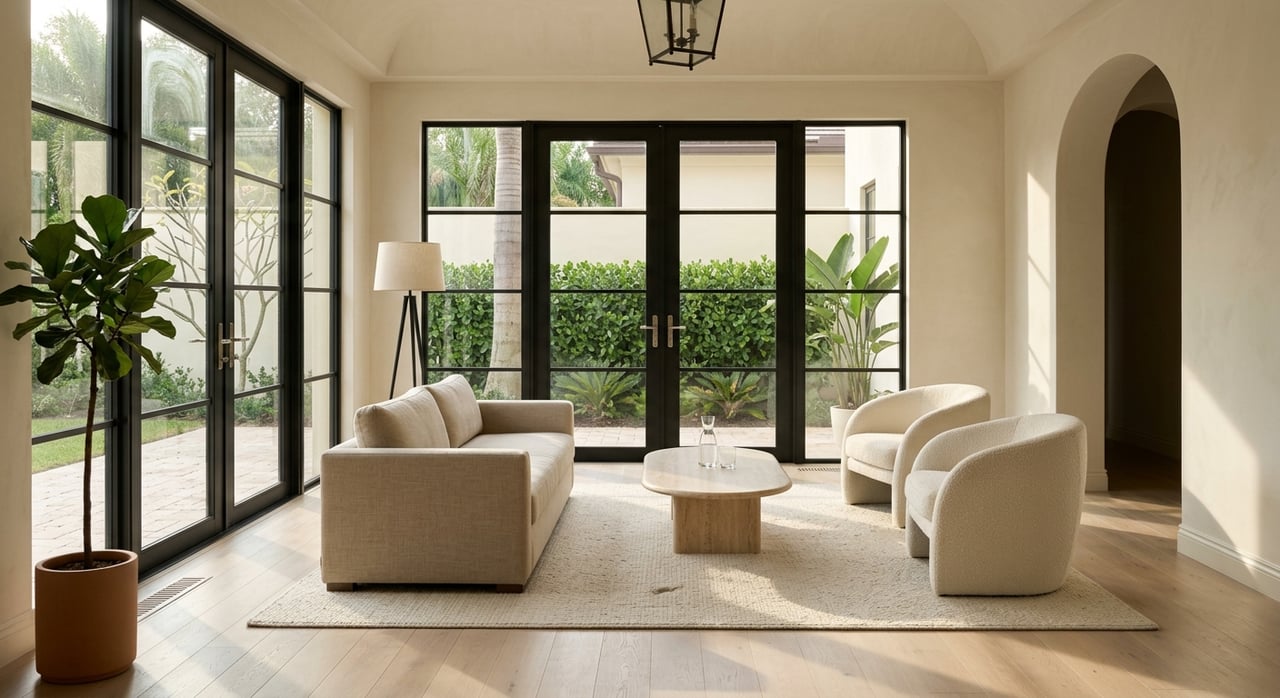
In the luxury segment, staging should feel less like decoration and more like editing. The purpose is to highlight scale, natural light, architecture, and ease of living. Every room should support the story of the house.
According to NAR’s 2025 staging data, the most commonly staged areas are the living room, primary bedroom, dining room, and kitchen. Those rooms tend to shape the emotional impression buyers carry with them after a showing. If you are deciding where to invest first, begin there.
Remove excess furniture, simplify accessories, and make each room’s function obvious. Buyers should never have to guess how a space is meant to be used. In larger estates, clarity becomes especially important.
Outdoor staging matters too. NAR’s survey found that 31% of buyers’ agents said outdoor or yard space is among the areas typically staged. In Pinecrest, where lot size and outdoor lifestyle are central to the value story, that number carries real weight.
Clean the pool deck, organize seating areas, and reduce visual clutter. Patios, terraces, and gardens should read as extensions of the home, not leftover square footage. The yard should feel ready for everyday use and entertaining alike.
Great listings rarely happen by accident. They are usually the result of the right sequence, completed without rushing. For Pinecrest estates, the strongest order is simple: clean, stage, photograph, then launch.
That sequence matters because online presentation now drives early interest. NAR’s photo-shoot guidance notes that most buyers shop online first, and that high-resolution photos and video are essential. In the 2025 staging report, 73% of buyers’ agents said photos were more important or much more important, followed by videos at 48% and virtual tours at 43%.
The camera magnifies clutter, awkward layouts, and unfinished details. What feels acceptable in daily life often looks distracting in listing media. That is why staging should be fully complete before photography begins.
Buyers who respond to your online presentation expect the in-person experience to match. If the photography suggests a polished home but the showing does not deliver the same impression, trust can erode quickly. Consistency matters.
In South Florida, launch timing should account for weather as much as buyer activity. NOAA states that Atlantic hurricane season runs from June 1 through November 30, and even quieter seasons still require preparation. For Pinecrest sellers, that creates a practical reason to complete exterior work and photography before the most weather-sensitive stretch whenever possible.
That advice becomes even more relevant because Pinecrest regulates parts of exterior maintenance and restricts fertilizer application from May 15 through October 31. If curb appeal is part of your value strategy, waiting until the last minute can limit your options.
Strong curb appeal can raise perceived value by as much as 7%, according to NAR’s 2026 curb-appeal guidance. The recommended improvements are often straightforward: mowing and edging, pressure-washing hardscape, trimming overgrown shrubs, refreshing mulch, and improving exterior lighting. In Pinecrest, those basics usually outperform anything overly ornate.
The most effective look is clean, shaded, and composed. Mature trees and broad lots are part of Pinecrest’s identity, so your goal is to reveal that character, not compete with it. A tidy, low-clutter exterior often feels more luxurious than one with too many competing design elements.
Even a beautifully prepared estate still needs the right market strategy. Pinecrest’s Q4 2025 metrics show 7.8 months of supply and a median 83 days to contract, which points to a market where patience and precision matter. A polished launch does not replace pricing discipline, but it gives pricing a stronger foundation.
This is especially important in a market where many buyers can act with cash. MIAMI REALTORS reported Pinecrest’s cash share at 60% as of January 2026 and identified the area as one likely to outperform within the million-dollar segment. Those buyers can move decisively, but they also tend to be highly selective.
A Pinecrest estate usually performs best when the design is edited, the outdoor spaces are fully prepared, the media is excellent, and the list price is aligned with recent local comparable sales. That combination gives you the best chance to protect value while reducing unnecessary time on market.
If you are preparing to sell a Pinecrest home, the right plan can make the difference between a listing that lingers and one that enters the market with confidence. For a design-forward, white-glove strategy tailored to South Florida luxury, connect with Jessica Adams Luxury Real Estate.
We've got more to share with you.
September 3, 2026
October 22, 2026
October 22, 2026
October 8, 2026
September 17, 2026
September 10, 2026
A New Home Changes Everything.