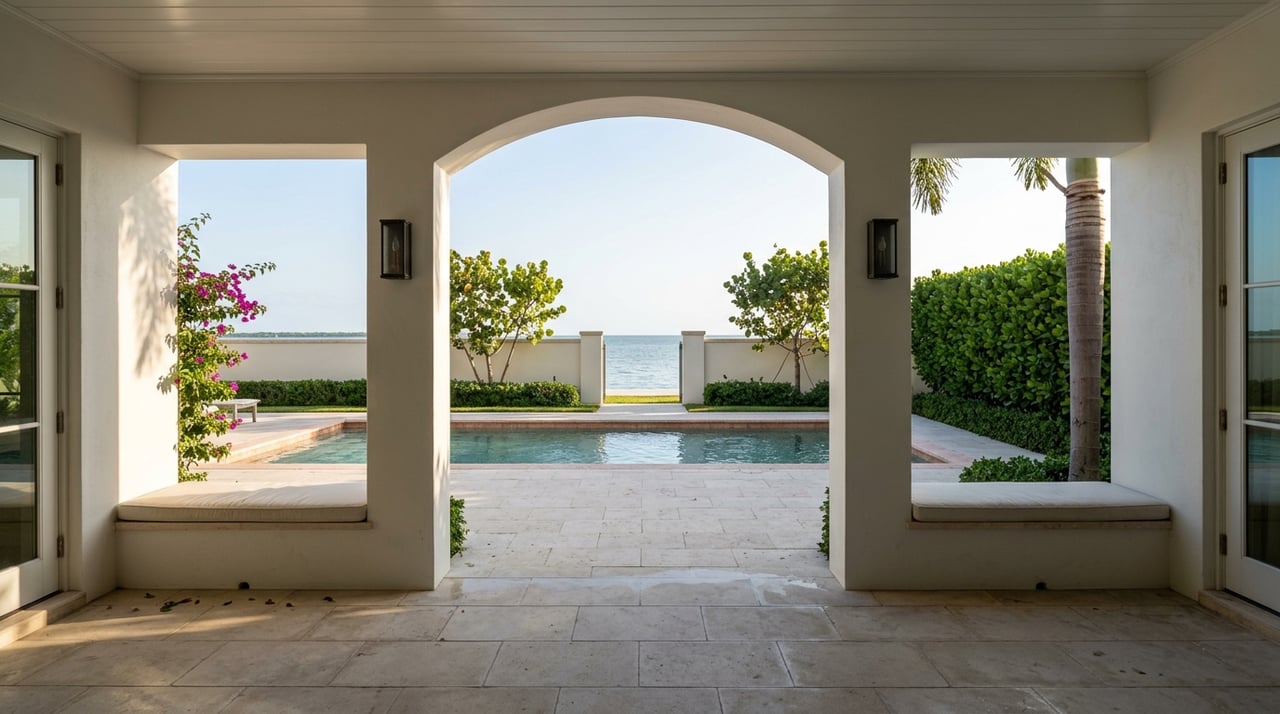
Cocoplum Waterfront Vs Interior Estates: How To Choose
June 4, 2026
June 4, 2026
If you are deciding between a waterfront home and an interior estate in Cocoplum, the right choice usually comes down to one simple question: how do you want the property to live day to day? In this gated Coral Gables enclave, the difference is not just about price or views. It is about boating access, yard utility, upkeep, privacy, and the kind of ownership experience you want. If you are weighing both paths, this guide will help you compare them with more clarity. Let’s dive in.
Cocoplum is best understood as a gated Coral Gables enclave made up of more than one neighborhood section, not one uniform collection of homes. The City of Coral Gables identifies Cocoplum I and Cocoplum II, also known as the Islands of Cocoplum, as adjacent neighborhoods.
That distinction matters because the community includes both waterfront and interior homes in meaningful numbers. The Islands HOA states that its phase includes 302 homes, with 172 of them on the water, while Cocoplum proper contains 150 homes and does not share access to the Islands’ private clubhouse. In other words, comparing waterfront and interior estates here is not a minor detail. It is central to how you shop the neighborhood.
For many buyers, waterfront living in Cocoplum starts with access. Coral Gables notes that its waterways connect to Biscayne Bay and that most are navigable by boat, which gives waterfront ownership a practical lifestyle advantage if boating is part of your routine.
The Islands HOA also notes that residents can purchase yacht slips at the Cocoplum Yacht Club, with slips ranging from 40 to 120 feet and walking-distance access from home. If you want your property to function like a marina-facing estate, that convenience can be hard to replicate inland.
A waterfront home makes the most sense when direct water contact is a priority rather than a nice extra. If you picture early departures by boat, dockside arrivals, or a home that supports a marine lifestyle, the waterfront side of Cocoplum aligns naturally with that goal.
This category also tends to carry a stronger lifestyle story in resale. Views, slip access, and water adjacency help define the appeal in a way that feels highly specific to Cocoplum’s setting.
Waterfront ownership is not only about the view. It often comes with more shoreline-related responsibility, including attention to docks, seawalls, and marine exposure.
Coral Gables’ waterways guidance recommends buffer zones, mangroves, and salt-tolerant coastal plantings to help with erosion control, flood mitigation, and stormwater management. In practical terms, that points to a more specialized maintenance profile than you would usually expect on an interior lot.
Interior estates appeal to buyers who want the privacy and prestige of Cocoplum without the added demands of direct waterfront ownership. In many cases, the advantage is not what is missing. It is what becomes easier.
Without shoreline infrastructure shaping the lot, interior homes often offer more flexible outdoor use. That can mean more room for lawn, a pool setting, entertaining space, or simply a layout that feels easier to manage around everyday living.
If you want your home to function more like a private compound than a boating base, an interior estate may be the better match. The ownership profile is usually simpler because you are not also managing dock systems, seawall condition, or as much salt-driven wear.
That difference can matter if you value low-friction ownership. Many buyers love the idea of water, but not everyone wants the responsibilities that come with maintaining it.
Privacy is strong throughout Cocoplum thanks to its gated structure and 24-hour security noted by the Islands HOA. Still, the character of privacy can differ depending on where the home sits.
Waterfront homes may have more visual exposure to canal activity, boat traffic, or dock service. Interior homes are often more shielded from shoreline visibility, which can create a quieter and more inward-facing feel.
No matter which type of home you prefer, flood and drainage diligence should be part of your decision. Coral Gables states that the city is particularly susceptible to flooding from major rain events and storm surge, with low-lying areas affected by a shallow groundwater table.
The city also monitors water levels at the Islands of Cocoplum and has funded drainage improvements in Cocoplum to reduce ponding and flooding while improving canal discharge water quality. That is useful context for any buyer, but it carries extra weight on waterfront parcels.
Coral Gables also makes clear that standard hazard insurance does not cover flood damage. For buyers comparing waterfront and interior estates, that means flood coverage should be reviewed as its own ownership cost and risk category rather than treated as a minor add-on.
Interior homes still require drainage awareness, but they generally avoid some of the waterfront-specific maintenance complexity tied to marine edges and salt exposure. That can make the ownership picture feel more straightforward.
Within a guarded community, traffic still has patterns. Coral Gables continues to study and adjust local traffic calming, and a 2026 workshop at the Coco Plum Women’s Club reviewed device locations and resident feedback for the area.
For you as a buyer, the practical takeaway is simple. Homes closer to main access points may feel a bit busier, while deeper interior addresses may feel more insulated from movement in and out of the community.
Cocoplum sits within one of Miami-Dade’s most established luxury submarkets. In Q2 2025, Coral Gables single-family homes averaged $3.28 million, with a median price of $2.3 million, 77 days on market, 183 active listings, and 8.6 months of supply.
That broader context supports Cocoplum’s long-term appeal, but waterfront and interior homes often speak to different buyers. Waterfront homes usually carry the more story-driven resale angle, shaped by boating access, views, and scarcity.
Interior estates tend to appeal to buyers who prioritize usable land and a less complex ownership profile. That can widen day-to-day appeal because the home functions more easily for buyers focused on privacy, outdoor living, and simplicity.
The clearest way to choose is to focus on your non-negotiables, not just the listing photos. In Cocoplum, both options offer privacy, prestige, and access to a gated Coral Gables setting. The better fit depends on how you want to use the property.
If the home must function like a private marina-facing estate, waterfront is usually the right choice. If the home must function like a quieter compound with stronger yard utility and a simpler upkeep profile, interior is often the better answer.
That is why the best Cocoplum purchase is rarely about choosing the most impressive feature in isolation. It is about choosing the property type that best fits your routine, your tolerance for maintenance, and the way you want to live in Coral Gables over time.
When you are ready to compare the nuances of Cocoplum with a more tailored lens, Jessica Adams Luxury Real Estate offers a white-glove, locally grounded approach to helping you evaluate waterfront and interior opportunities with clarity.
We've got more to share with you.
September 3, 2026
October 22, 2026
October 22, 2026
October 8, 2026
September 17, 2026
September 10, 2026
A New Home Changes Everything.